Rising energy bills, ageing boilers, and growing environmental concerns continue to worry homeowners across the UK. Many households feel stuck between comfort and cost, while traditional heating systems become less reliable each year. As a result, inefficient heating can quietly drain finances and increase carbon emissions.
However, there is a proven alternative that addresses these challenges head-on. Ground source heating installation offers a dependable, low-running-cost solution that works all year round. By using natural heat stored beneath the ground, this system delivers steady warmth while reducing reliance on fossil fuels. Furthermore, with the right planning and professional setup, homeowners can enjoy long-term savings, improved efficiency, and consistent indoor comfort without complex operation or constant maintenance.
Understanding Ground Source Heating Systems
Ground source heating systems work by collecting heat from the ground and transferring it into your home through a heat pump. Because ground temperatures remain stable throughout the year, these systems provide reliable heating even during colder months.
Unlike conventional boilers, the system does not burn fuel. Instead, it moves heat using electricity, which makes it highly efficient. For every unit of electricity used, several units of heat are produced. As a result, homeowners benefit from lower energy consumption and steady performance.
Most importantly, the system integrates seamlessly with underfloor heating and low-temperature radiators. This compatibility ensures comfortable heat distribution without sudden temperature changes.
How Ground Source Heating Installation Works in Practice
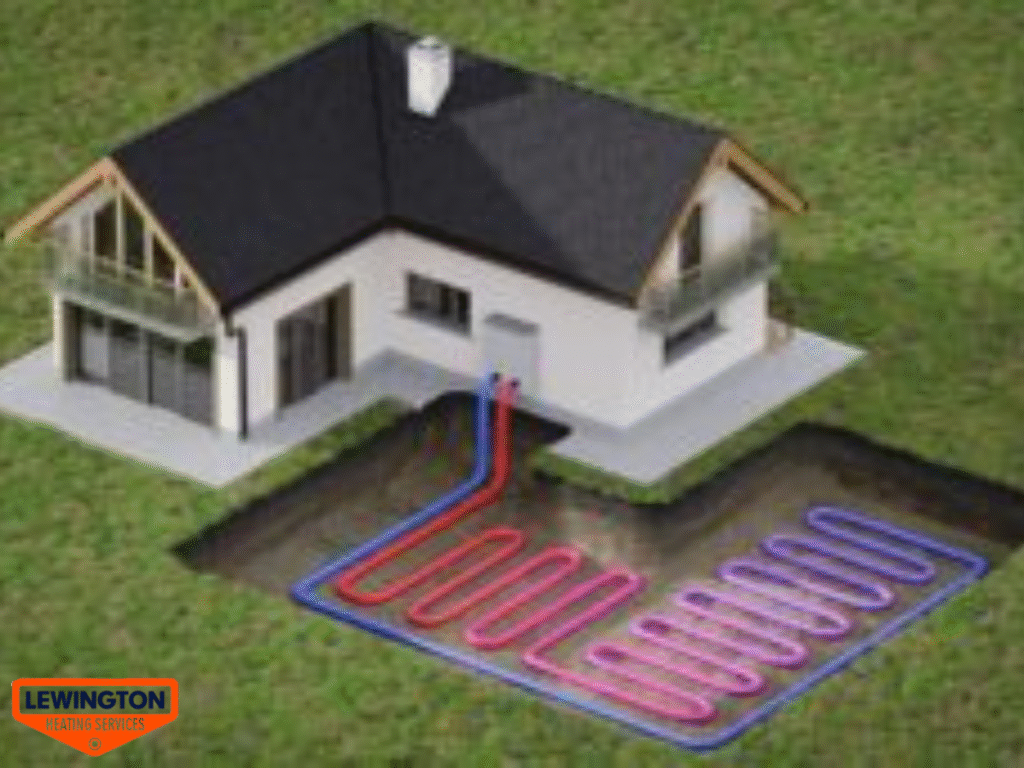
Ground source heating installation begins with assessing the land surrounding a property. Depending on available space and soil conditions, installers choose either horizontal trenches or vertical boreholes.
Once the ground loops are installed, they circulate a water-based solution that absorbs natural heat. This heat is then upgraded by the heat pump and delivered into the home. Meanwhile, the system works quietly in the background, requiring minimal input from homeowners.
Furthermore, professional planning ensures the system matches the property’s size and heating demand. When installed correctly, the process delivers long-term reliability and energy efficiency without disruption to daily life.
Types of Ground Loop Systems Explained
Different properties require different ground loop designs. Choosing the correct option is essential for performance and efficiency.
Horizontal Ground Loops
Horizontal loops are installed in shallow trenches across open land. This option suits properties with large gardens or surrounding space. Installation is generally quicker and less expensive than deep drilling.
However, sufficient land area is essential. The loops must be spaced correctly to maintain heat absorption. When conditions are suitable, this method delivers excellent performance for family homes.
Vertical Borehole Loops
Vertical loops are drilled deep into the ground and are ideal for properties with limited outdoor space. Although installation requires specialised equipment, the results are highly consistent. Because these loops reach deeper ground layers, they maintain stable heat output all year. Therefore, many urban or compact properties benefit from this approach.
Key Benefits of Ground Source Heating Installation
Ground source heating installation provides a wide range of advantages for homeowners seeking long-term value.
Firstly, running costs are significantly lower compared to traditional heating systems. Although installation costs are higher initially, savings accumulate over time.
Secondly, the system offers reliable heating throughout the year. Unlike air-based systems, ground temperatures remain stable, ensuring consistent performance.
In addition, these systems produce fewer carbon emissions. As a result, they support environmental goals while improving household efficiency. With fewer moving parts, maintenance needs also remain low, reducing ongoing concerns.
Is This Heating System Right for Your Property?
Not every home is the same, so suitability matters. Ground source heating installation works best in well-insulated properties with sufficient outdoor space or drilling access. Homes undergoing renovation often benefit most, as systems can be designed alongside insulation improvements. However, existing homes can also be upgraded with careful planning.
Moreover, heating demand plays a role. Larger properties with steady heating needs tend to see the greatest returns. A professional assessment helps determine whether this solution fits your home’s layout, soil type, and energy goals.
Installation Process: What Homeowners Can Expect
The installation process follows a clear and structured path. Initially, a site survey identifies ground conditions and system size requirements. Next, ground loops are installed using trenches or boreholes. This stage requires precision to ensure long-term efficiency. Once completed, the heat pump is fitted inside the property and connected to the heating system.
After testing and commissioning, the system is ready for use. Homeowners receive guidance on operation, ensuring confidence from day one. When handled professionally, disruption remains minimal, and results are long-lasting.
Costs, Savings, and Long-Term Value
Ground source heating installation involves higher upfront costs compared to standard boilers. However, long-term savings often outweigh the initial expense. Lower energy bills, reduced maintenance, and extended system lifespan contribute to overall value. Additionally, renewable heating systems may increase property appeal over time.
While every property differs, many homeowners find that steady savings and dependable performance justify the investment. Careful planning ensures financial expectations align with actual outcomes.
Maintenance and System Longevity
Once installed, ground source heating systems require minimal maintenance. Annual checks ensure smooth operation, while ground loops often last several decades. Because the system operates at low stress levels, component wear remains limited. As a result, homeowners enjoy consistent heating without frequent repairs.
Moreover, simple controls make daily use straightforward. With proper care, the system delivers dependable heating for many years, offering peace of mind alongside efficiency.
Environmental Impact and Energy Efficiency
Ground source heating installation supports cleaner energy use by reducing reliance on fossil fuels. By using natural ground heat, carbon emissions are significantly lower than traditional systems.
Furthermore, the system works efficiently even during colder periods. This reliability helps households reduce overall energy demand. Over time, these benefits contribute to both household savings and wider environmental responsibility.
Why Professional Installation Matters
Correct design and installation directly affect system performance. Poor planning can lead to reduced efficiency or uneven heating.
Experienced installers ensure the system matches the property’s heating needs and ground conditions. They also handle compliance and testing to industry standards. As a result, professional expertise protects your investment and ensures long-term success.
Conclusion
Ground source heating installation remains one of the most reliable and efficient heating options for UK homes seeking long-term value. With stable performance, low running costs, and reduced environmental impact, it offers a practical alternative to traditional systems.
For homeowners ready to invest in lasting comfort and efficiency, ground source heating installation delivers dependable results when designed and installed correctly.
Choose ground source heating installation with Lewington Heating for reliable efficiency, expert installation, and long-term comfort. Speak to our specialists today and invest in a dependable heating solution built for your home.