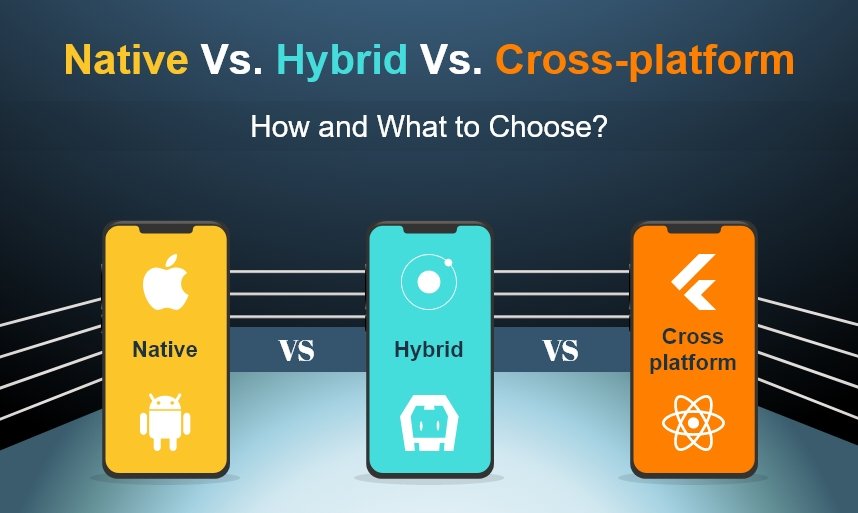
In today’s digital-first world, having a mobile app is no longer a luxury, it’s a necessity. Businesses across industries are investing heavily in mobile solutions to enhance user engagement, streamline operations, and boost revenue. However, one of the most critical decisions in mobile app development is choosing the right development approach: Native, Hybrid, or Cross-Platform. Each approach has its advantages, challenges, and ideal use cases, and understanding these differences is essential before investing in custom mobile application development services.
This article explores the distinctions between Native, Hybrid, and Cross-Platform mobile app development, helping you make an informed decision for your business.
What is Native Mobile App Development?
Native apps are built specifically for a single platform, either iOS or Android, using platform-specific programming languages and tools:
- iOS: Swift or Objective-C
- Android: Kotlin or Java
Because they are tailored for a particular operating system, native apps can fully leverage the device’s hardware and software capabilities, offering superior performance and user experience.
Advantages of Native Apps
- High Performance: Native apps run faster and more efficiently because they are optimized for a specific platform.
- Enhanced User Experience: They adhere to platform-specific design guidelines, making navigation intuitive.
- Access to Device Features: Native apps can utilize device hardware like cameras, GPS, accelerometers, and biometrics seamlessly.
- Better Security: Platform-specific security measures are easier to implement, making native apps more secure.
Challenges of Native Apps
- Higher Development Cost: Developing separate apps for iOS and Android can be expensive.
- Longer Development Time: Maintaining two codebases increases development time and complexity.
- Resource Intensive: Requires specialized developers for each platform.
Best Use Case: Native apps are ideal for performance-intensive applications like gaming, AR/VR, and apps that require complex interactions with device hardware.
What is Hybrid Mobile App Development?
Hybrid apps combine elements of both native and web applications. They are built using web technologies like HTML, CSS, and JavaScript and run inside a native container, which allows them to function on multiple platforms simultaneously. Popular frameworks for hybrid app development include Ionic, Cordova, and PhoneGap.
Advantages of Hybrid Apps
- Single Codebase: Write once, deploy everywhere hybrid apps can run on multiple platforms, reducing development time.
- Cost-Effective: Maintaining a single codebase is cheaper than developing separate native apps.
- Faster Deployment: Since hybrid apps share code across platforms, they can be launched more quickly.
- Web Integration: Hybrid apps easily integrate with web-based applications and services.
Challenges of Hybrid Apps
- Performance Issues: Heavy graphics or complex animations can slow down hybrid apps compared to native apps.
- Limited Access to Device Features: While hybrid frameworks provide access to many native APIs, some advanced device capabilities may be limited.
- UI/UX Inconsistencies: Achieving a platform-specific look and feel can be challenging.
Best Use Case: Hybrid apps work well for simple applications, content-driven apps, or apps that need to reach multiple platforms quickly on a budget.
What is Cross-Platform Mobile App Development?
Cross-Platform apps are similar to hybrid apps in that they aim to run on multiple platforms using a single codebase. However, unlike traditional hybrid apps, cross-platform apps use frameworks that compile into native code, delivering near-native performance. Popular frameworks include Flutter, React Native, and Xamarin.
Advantages of Cross-Platform Apps
- Single Codebase, Multiple Platforms: Like hybrid apps, cross-platform apps save time and cost by sharing a common codebase.
- Near-Native Performance: Frameworks like Flutter render UI elements using native components, ensuring smooth performance.
- Custom UI/UX: Developers can create visually appealing and responsive designs that closely mimic native behavior.
- Faster Development: Rapid development cycles with tools like hot reload make iterations faster.
Challenges of Cross-Platform Apps
- Framework Limitations: Some device-specific features may require custom native code.
- Dependency on Framework Updates: Compatibility issues can arise when new OS versions are released.
- Larger App Size: Cross-platform apps can be slightly larger in size compared to native apps.
Best Use Case: Cross-platform apps are ideal for startups, MVPs, and businesses that want a high-quality mobile presence on both iOS and Android without maintaining separate codebases.
Native vs Hybrid vs Cross-Platform: Key Comparisons
| Feature | Native | Hybrid | Cross-Platform |
| Performance | Excellent | Moderate | Near-native |
| Development Cost | High | Low | Moderate |
| Development Speed | Slower | Faster | Faster |
| Access to Device Features | Full | Limited | Mostly full |
| User Experience | Best | Moderate | Good |
| Maintenance | Complex | Easier | Moderate |
Choosing the Right Approach for Your Business
Selecting the right development approach depends on your business goals, budget, timeline, and app requirements:
- If Performance and UX are Top Priorities: Go native. Perfect for complex applications with advanced device integration.
- If Budget and Speed are Crucial: Go hybrid. Ideal for simple apps or proof-of-concept projects.
- If You Want a Balance of Performance, UX, and Cost: Go cross-platform. Flutter, for example, offers near-native performance and rapid development, making it a favorite among businesses in the USA and worldwide.
For companies looking to build robust applications without overextending resources, partnering with a Flutter application development company in USA ensures your app is scalable, fast, and visually appealing.
The Future of Mobile App Development
The lines between native, hybrid, and cross-platform development are blurring as frameworks evolve. Modern tools like Flutter allow developers to build highly interactive apps with near-native performance, even on multiple platforms. This convergence provides businesses with more options and flexibility when choosing custom mobile application development services.
Businesses are increasingly prioritizing user experience, speed, and cost-efficiency. Cross-platform development, powered by frameworks like Flutter, is becoming a preferred choice, especially for startups and mid-sized companies that want to quickly deliver high-quality mobile experiences to both iOS and Android users.
Final Thoughts
Choosing between native, hybrid, and cross-platform app development is a strategic decision that impacts performance, cost, and long-term scalability. There is no one-size-fits-all solution each approach has its unique strengths and limitations.
For businesses that want high-quality apps with excellent user experience and efficiency across platforms, leveraging a Flutter application development company in USA can be the smartest move. At the same time, enterprises requiring maximum performance may still prefer native development for mission-critical applications.
At Diginautical, we specialize in delivering custom mobile application development services tailored to your business needs, whether you aim for a native, hybrid, or cross-platform solution. Our team ensures your app is not only functional and visually appealing but also optimized for performance and user engagement across all platforms.